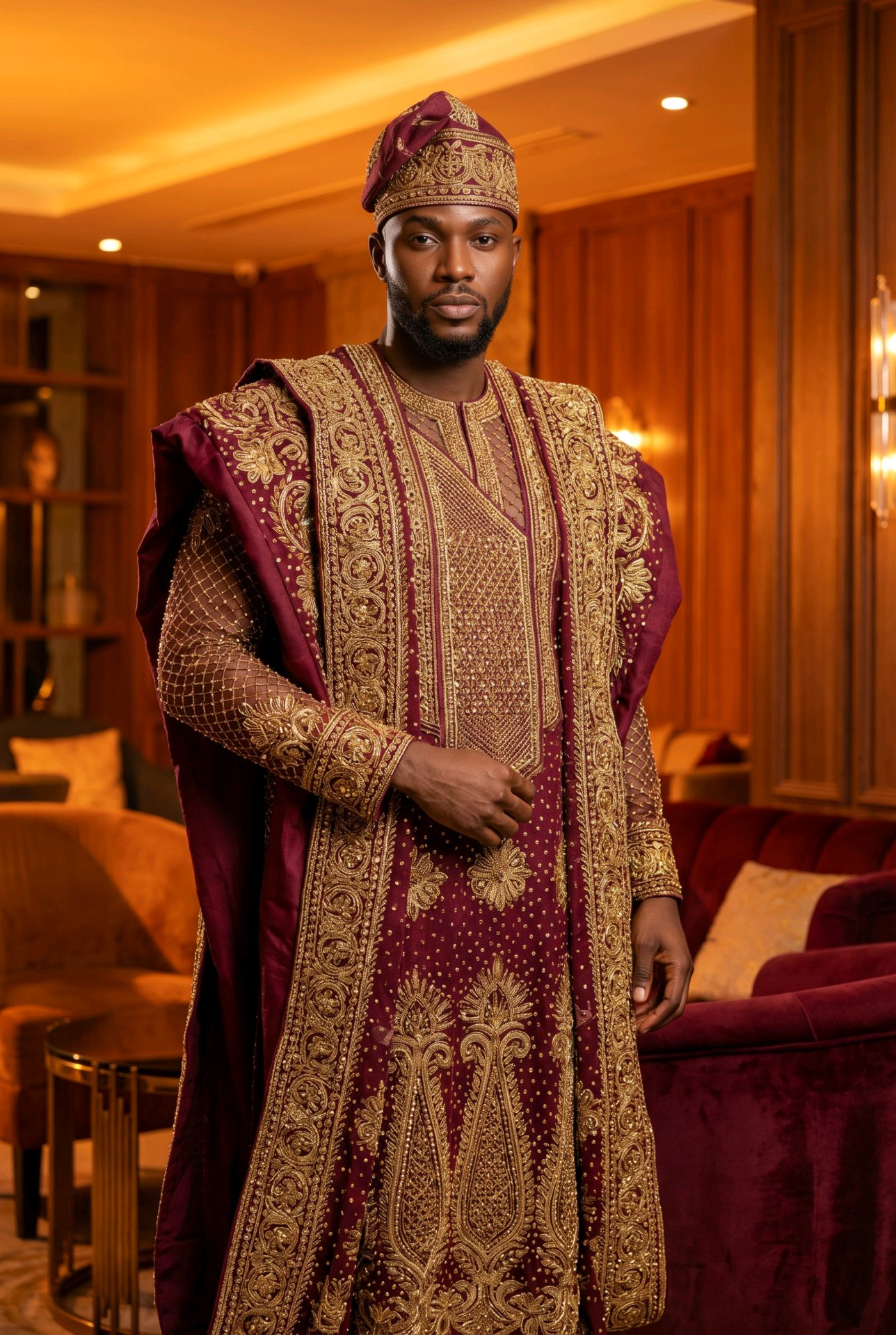
Lucky: Dressing the Diaspora Man with Intention
Lucky grew up watching his grandfather dress for celebrations. Today, from his Lagos atelier, he makes agbadas, senator suits, and kaftans for diaspora men who want to arrive at life's biggest moments dressed with intention.
Lucky Okafor grew up watching his father dress for celebrations. Every Saturday morning, the ritual was the same: the careful unfolding of the agbada from its storage bag, the deliberate choice of cap, the slow transformation from a man in a house into a man at an event. Lucky was seven the first time he understood that clothing could be a kind of language.
He trained as a tailor's apprentice in Surulere before earning a scholarship to study fashion design in Milan, where he spent three years learning how European tailoring achieved its structured geometry and colour with an almost architectural precision. He returned to Lagos with a new vocabulary and opened his atelier on the mainland at twenty-six.
Today, at thirty-one, Lucky is one of the most sought-after male celebration wear designers in Lagos. His clients include grooms, fathers of the bride, and diaspora men flying home for weddings and naming ceremonies who want to arrive dressed with intention.
The Philosophy: Elevation Without Erasure
Lucky's work is rooted in a single conviction: that African men deserve garments that honour tradition while moving with the times. He does not believe in choosing between heritage and modernity. "The agbada has been evolving for centuries," he says. "What I do is just the next chapter."
His signature is restraint. Where other designers pile on embellishment, Lucky edits. A deep forest green agbada with a single panel of geometric gold embroidery at the chest. A burgundy senator suit where the gold trim does the talking and the silhouette does the rest. An ivory kaftan in silk-like fabric where the hand-stitched Yoruba patterns are the only ornament needed.
The result is garments that photograph beautifully but feel even better in person — a quality his diaspora clients particularly value, because they are often wearing these pieces at the most photographed moments of their lives.
The Agbada
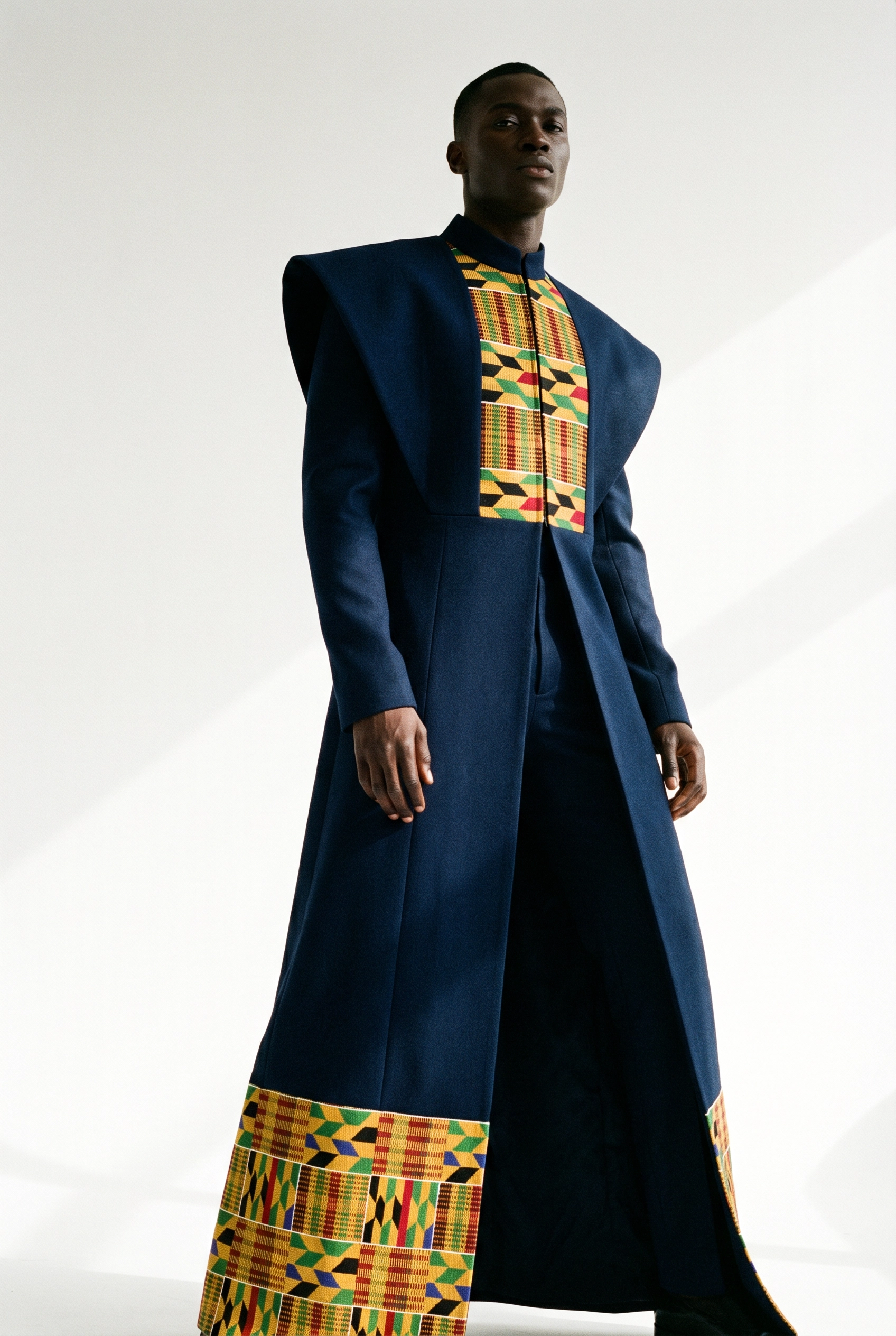
Lucky's most requested piece. He offers both the classic three-piece (buba, sokoto, and outer agbada) and a modern two-piece variation with a structured shoulder and slimmer outer layer. Fabrics range from traditional aso-oke to imported jacquard and raw silk blends.
The Oke Agbada in forest green aso-oke with hand-stitched geometric gold embroidery is available in navy, burgundy, and ivory. Each piece is cut to the client's exact measurements and takes between four and six weeks to complete.
The Senator Suit
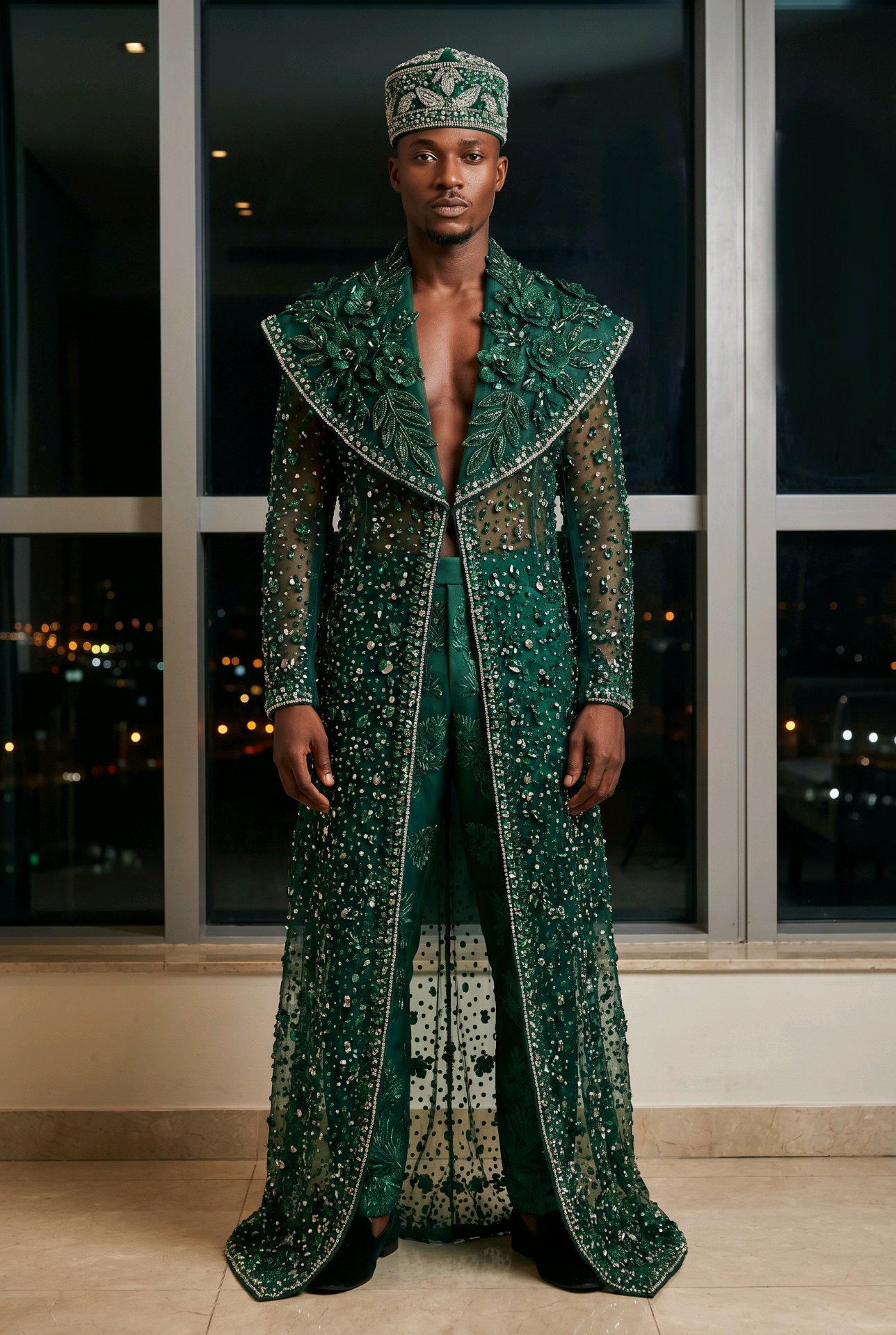
A fitted top-and-trouser combination that has become the default choice for the modern African man at celebrations. Lucky's version features a mandarin collar, structured chest, and subtle embroidery at the cuffs and placket.
The Oke Senator in deep burgundy with gold trim detailing features a structured mandarin collar and wide-leg trouser. Available in charcoal, forest green, and cobalt — it is the piece Lucky recommends for diaspora clients attending celebrations in cooler climates, where the full agbada can feel impractical.
The Kaftan
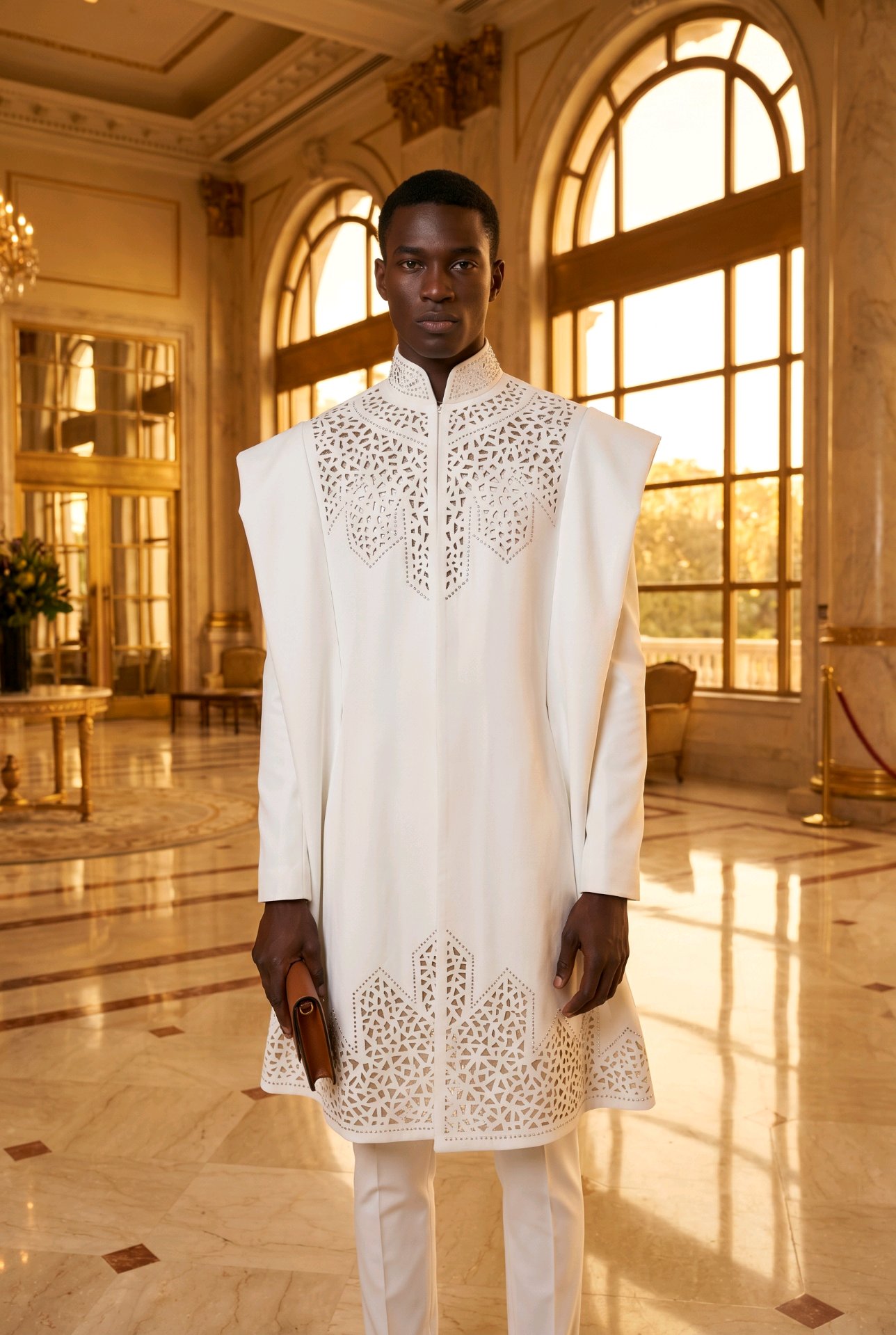
Flowing, dignified, and increasingly popular with diaspora clients who want something that reads as unmistakably African without requiring the full formality of an agbada. Lucky's kaftans are cut generously but not shapeless, with embroidery that references Yoruba geometric traditions.
The Oke Kaftan in ivory silk-blend with Yoruba geometric embroidery in gold thread is available in white, champagne, and pale grey. It is Lucky's most versatile piece — worn equally at naming ceremonies, anniversaries, and milestone birthdays.
Working with the Diaspora
A significant portion of Lucky's commissions come from men in the UK, the US, and Canada — sons flying home for their parents' anniversaries, grooms marrying in Houston or Toronto who want to honour their Yoruba heritage, fathers of the bride who have been away for twenty years and want to arrive looking like they never left.
"The diaspora client has a very specific kind of pressure," Lucky explains. "They want to look like they belong — like they know exactly who they are. That's what I try to give them. Not a costume. A statement."
The process begins with a video consultation, during which Lucky takes the client through fabric options, silhouette choices, and embroidery references. Measurements are taken at a local tailor recommended by Lucky, or sent via a detailed self-measurement guide. The garment is then made in his Lagos atelier and shipped directly to the client's door.
Commission Lucky
Lucky is accepting commissions for celebrations in 2026. Lead time is eight to twelve weeks from consultation to delivery. He works with a small number of clients at any one time to ensure every garment receives his full attention.
When Yasoké launches, Lucky will be among the founding designers on the platform — bringing his Lagos atelier to diaspora clients anywhere in the world, with the trust and transparency that every commission deserves.
"A man dressed with intention walks differently. That's what I'm making — not just clothes. Confidence, carried in cloth."
— Lucky, Lagos